
AceHawky AceHawky

Top Rangefinder Scopes Factory for Global Buyers?

Time:2026-09-30 Author:Sophia
0%

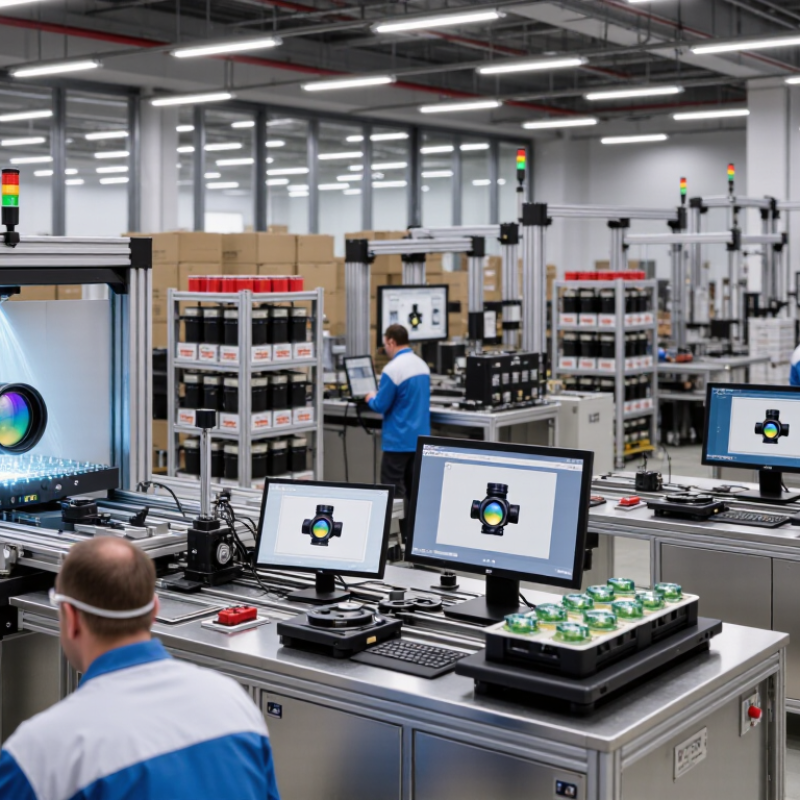
Finding the top Rangefinder Scopes Factory requires more than comparing product photos or export prices. Global buyers need measurable optical performance, stable production, and dependable after-sales support. A scope may look sharp under showroom lighting, yet fail when rain covers the objective lens or recoil shifts its point of aim.

Industry data supports this growing focus on precision optics. Grand View Research has identified continued expansion in the global optical coatings market, driven by demand for clearer transmission, durability, and outdoor performance. Mordor Intelligence’s sporting optics market analysis also highlights product quality, technological integration, and regional distribution as important competitive factors. These findings matter because rangefinder scopes combine coated lenses, laser measurement systems, electronic controls, and mechanical alignment in one compact platform.

Factory capability matters.

An experienced manufacturer should provide documented inspection procedures, lens-transmission testing, recoil simulation, waterproof verification, and battery performance checks. Buyers should also review tolerance records, sample consistency, and calibration methods before signing large orders. ISO 9001 certification can indicate process discipline, but it does not replace independent product testing or factory visits.

No factory is perfect. Even reliable suppliers may face component shortages, calibration drift, or communication gaps across time zones. The stronger partner is the one that records these risks, explains corrective actions, and improves its process openly. For global buyers, the best factory is not simply the cheapest source. It is a transparent production partner that can deliver repeatable accuracy, lawful market compliance, clear documentation, and practical support from prototype to shipment.
Top Rangefinder Scopes Factory for Global Buyers?

Understanding Rangefinder Scopes and Their Core Functions

Top Rangefinder Scopes Factory for Global Buyers?

Understanding Rangefinder Scopes and Their Core Functions

A rangefinder scope combines optical magnification with distance measurement. It helps users estimate space between the viewing point and a lawful outdoor target. The system commonly uses a laser sensor, internal processor, display, and illuminated reticle. Light changes everything. Bright sun, fog, rain, and thick vegetation can affect readings.

The reticle provides a visual aiming reference, while the rangefinder supplies distance data. Some models also calculate angle, holdover, or ballistic correction. These functions depend on accurate calibration and responsible use. A clear lens, stable mounting system, and comfortable eye relief improve practical performance. Parallax adjustment can sharpen the image at different distances. Battery access matters too, especially during long field sessions.

Quality should be checked through repeatable tests rather than impressive specifications alone. Measure the same stationary object several times under changing light. Compare the displayed distance with a reliable reference. Small errors matter. Weather resistance, control placement, and readable numbers often influence daily use more than extreme magnification. No optic is perfect, and rangefinder technology can occasionally misread reflective, moving, or partially hidden surfaces. That limitation deserves attention. Buyers should review local regulations, follow safe handling practices, and select equipment suited to lawful sporting, surveying, or wildlife observation purposes.

Key Features That Define a Top-Rangefinder Scope Factory

Top Rangefinder Scopes Factory for Global Buyers

A top-rangefinder scope factory begins with consistent optical engineering, not attractive packaging. Its lenses should deliver clear images across changing light conditions. A practical factory also controls alignment, coating quality, and internal sealing during production. These details matter when users observe distant targets through fog, dust, or sudden glare.

Reliable range measurement requires more than a sensor. The factory should test distance accuracy at multiple ranges and angles. It should record calibration data for every production batch. Traceable inspections make quality problems easier to identify and correct. Independent testing is valuable, but internal testing must remain strict too. No factory is flawless. That is worth admitting. Buyers should review failure rates, warranty procedures, and technical support before ordering. Clear documentation also supports responsible and lawful use in different markets.

Tips:

Ask for sample test reports, not only performance claims. Check measurement consistency in low light. Confirm ingress protection and temperature testing. Request user manuals in suitable languages. Discuss spare parts and calibration service early. A careful factory should answer these questions without pressure. Pricing still matters, but the cheapest option may hide weak inspection steps. I would also request a small evaluation order before committing to volume. This approach can reveal focus errors, uneven controls, or unclear communication.

Manufacturing Standards, Technologies, and Quality Control

A reliable rangefinder scope factory is judged by evidence, not polished promises. Manufacturing should follow ISO 9001 procedures, including document control, traceable inspections, and corrective actions. The ISO Survey 2022 recorded 1,265,216 ISO 9001 certificates worldwide, showing how widely this quality framework is used. Certification alone, however, does not guarantee accurate optics.

Production teams should verify lens centering, reticle alignment, laser measurement repeatability, and digital display clarity. Each unit needs testing at several distances, temperatures, and light levels. Calibration equipment should connect to an ISO/IEC 17025-accredited laboratory. For outdoor products, IEC 60529 ingress testing can assess resistance against dust and water. A practical factory report should show measured deviation, not only a pass label. For example, buyers may request accuracy results at 100, 500, and 1,000 meters. Small details matter.

Market research also supports stronger technical scrutiny. A 2024 MarketsandMarkets analysis valued the laser rangefinder market at approximately USD 1.2 billion in 2023. Growth increases supplier competition, but it may also encourage rushed production. Factories should use incoming lens inspection, torque-controlled assembly, vibration testing, and batch sampling. Serial-number records make failures easier to trace. No factory is flawless. Even a sealed housing can develop weakness after thermal cycling. Honest suppliers disclose that risk, repeat the test, and improve the process instead of hiding an imperfect result.

How Global Buyers Can Evaluate Suppliers and Products

Top Rangefinder Scopes Factory for Global Buyers?

Global buyers should evaluate the supplier before admiring the product. A factory visit, video audit, or independent inspection can reveal more than a glossy catalog. Check lens coating records, assembly cleanliness, alignment procedures, and technician training. Ask for serial-level inspection reports. Ask again when answers sound vague.

ISO’s 2022 Survey reported more than 1.26 million ISO 9001 certificates worldwide. Certification is useful, but it is not proof of optical performance. Request the certificate scope, issuing body, and recent corrective-action records. Compare those documents with actual production samples. A reliable supplier should explain rejected units, not hide them.

Product testing needs measurable details. Review rangefinder accuracy at short and long distances, low-light clarity, parallax behavior, battery endurance, and waterproofing evidence. IEC 60529 provides a recognized framework for ingress protection, while environmental testing can follow relevant IEC or military-derived procedures. Do not accept “waterproof” without test conditions. A 2023 Grand View Research report estimated the global sporting optics market at over USD 1.5 billion, showing strong demand but also intense supplier competition. Price pressure may reduce inspection depth. That risk deserves attention. I would test three production units, not one selected sample. Even then, my judgment could be wrong. Keep independent pre-shipment checks in the purchasing plan.

Top Rangefinder Scopes Factory for Global Buyers? — How Global Buyers Can Evaluate Suppliers and Products
Evaluation Area Metric Practical Screening Benchmark What Buyers Should Verify
Laser ranging Maximum stated range Compare the quoted range with the intended target type and use; treat maximum range as a test-condition figure, not a guaranteed result in all environments. Request test results for reflective and low-reflectivity targets, along with target size, weather, and measurement conditions.
Laser ranging Measurement accuracy Use the supplier’s stated accuracy as a comparison point; performance can vary with distance, target surface, and atmospheric conditions. Ask for an accuracy specification by distance band and an independent or witnessed test report.
Optics Magnification and objective size Compare magnification and objective diameter against the intended viewing task; higher magnification can narrow the field of view and increase sensitivity to movement. Check the complete optical specification, usable field of view, and image quality across the stated magnification range.
Optics Eye relief and field of view Assess eye relief for the intended mounting position and user requirements. Field of view should be compared at the same magnification. Request measurements in consistent units and confirm them on a production sample.
Reticle and display Reticle options and brightness control Confirm available reticle patterns, illumination settings, and whether the display remains readable in the intended lighting conditions. Review daylight and low-light demonstrations; verify that controls are accessible and settings are documented.
Environmental protection Water and dust resistance Request an ingress-protection rating appropriate to the intended use. An IP rating should be supported by a test report; it is not a substitute for impact testing. Verify the exact tested configuration, test laboratory, report date, and any limits on immersion or exposure.
Power Battery type and operating time Compare battery format, expected operating time, and low-battery indication under a clearly stated test method. Ask how operating time was measured, whether ranging frequency affects it, and whether battery access is possible in the field.
Temperature and durability Operating temperature and recoil or shock testing Evaluate the stated temperature limits and durability claims against the intended application; do not assume a general ruggedness claim covers recoil. Request test methods, sample configuration, pass criteria, and written compatibility guidance for the intended mounting setup.
Compliance Market-specific regulatory documents Requirements depend on destination market and product features. Radio-frequency, laser, chemical, and electrical requirements may differ. Confirm applicable regulations with the importer or compliance specialist and review reports for the exact model and configuration.
Supplier capability Quality management and traceability Look for documented incoming inspection, production checks, final testing, and serial or batch traceability. Review current certificates where relevant, inspection records, corrective-action processes, and a sample quality plan.
Production readiness Samples, lead time, and order terms Compare sample availability, quoted production lead time, minimum order quantity, and the definition of a production-ready sample. Obtain written terms for sample approval, specification changes, packaging, delivery, and handling of nonconforming goods.
After-sales support Warranty and service process Compare the proposed warranty period and coverage; terms are supplier-specific and should not be assumed from product category alone. Request written coverage, exclusions, repair or replacement process, spare-parts availability, and expected response times.

Note: These are supplier-screening criteria, not universal product standards. Confirm every specification against the exact model, intended market, and documented test conditions.

Export Support, Customization, and Long-Term Cooperation

Top Rangefinder Scopes Factory for Global Buyers?

A dependable rangefinder scope factory should offer more than a product catalog. Export support begins with clear specifications, accurate quotations, and stable communication. Experienced teams can explain optical performance, ranging accuracy, mounting options, and environmental limits in practical terms. They should also provide product drawings, inspection records, and packaging details before production starts. Small details matter. A buyer may need metric or imperial measurements, multilingual labels, or documentation for local customs procedures.

Customization becomes valuable when it solves a real field problem. Buyers may request a different reticle, housing finish, battery compartment, or mounting interface. Each change should receive technical review before approval. Sample testing can reveal issues that drawings miss, such as eye relief discomfort or unclear readings in low light. That process is not always fast. It is still safer than promising an untested design. Compliance documents and product markings must match the destination market and intended use.

Long-term cooperation depends on consistent quality, not friendly promises alone. A capable supplier should define inspection points, tolerance ranges, delivery schedules, and after-sales responsibilities in writing. Batch records help trace lens coating, electronic modules, and final calibration. Factory visits or independent inspections may add time and cost, but they improve confidence. Some projects will need revision after field feedback. A reliable partner listens, records the failure, and adjusts the process instead of hiding it. That is where professional experience becomes measurable.

Top Rangefinder Scopes Factory for Global Buyers

The chart presents practical planning benchmarks for export-oriented rangefinder scope projects, including sample approval, customization, production, inspection, and dispatch. Actual lead times depend on order quantity, specifications, compliance requirements, and shipping destination.

FAQS

What does a rangefinder scope do?

It combines magnified viewing with distance measurement. A sensor, processor, display, and illuminated reticle work together.

Can weather affect distance readings?

Yes. Bright sun, fog, rain, and thick vegetation can change results. Light matters.

How can I check ranging accuracy?

Measure the same stationary object several times. Compare readings with a reliable reference. Repeat the test under different lighting.

Which surfaces may cause unreliable readings?

Reflective, moving, or partly hidden surfaces can be misread. Still, displayed numbers may look convincing.

Which practical features should buyers compare?

Check eye relief, clear lenses, stable mounting, readable controls, and battery access. Extreme magnification is not everything.

What can be customized for a specific use?

Possible changes include the reticle, housing finish, battery compartment, or mounting interface. Test samples before approving a design.

What should export documentation include?

Buyers can request clear specifications, product drawings, inspection records, and packaging details. Local labeling needs may differ.

How can buyers assess a supplier’s consistency?

Ask for written inspection points, tolerances, delivery schedules, and after-sales responsibilities. Batch records help trace components and calibration. A factory visit may add time and cost.

Conclusion

Choosing the right Rangefinder Scopes Factory is essential for global buyers seeking accurate, durable, and dependable optical equipment. A quality rangefinder scope combines clear magnification, precise distance measurement, reliable reticle performance, and rugged construction to support consistent use in demanding outdoor conditions. Leading factories distinguish themselves through advanced optical design, precision machining, strict material selection, and comprehensive quality control from component inspection to final testing.

Global buyers should evaluate suppliers by reviewing production capabilities, testing procedures, certifications, product consistency, and communication efficiency. A dependable manufacturer should also provide flexible customization, such as reticle options, housing finishes, packaging, and technical specifications, while maintaining stable lead times and transparent export support. Clear documentation, secure logistics coordination, responsive after-sales service, and a willingness to develop long-term cooperation are equally important. By comparing these factors carefully, buyers can identify a capable manufacturing partner that delivers reliable products, consistent quality, and practical support for different international markets.

Sophia

Sophia

Sophia is a dedicated marketing professional with an exceptional depth of knowledge about her company's products and services. With a keen understanding of market trends and customer needs, she crafts insightful blog posts that not only inform but also engage readers, enriching the company’s online......