
AceHawky
Range Scopes are precision tools designed to help shooters observe, aim, and evaluate performance at measured distances. They are not magic devices. A clear image still depends on sound technique, stable positioning, suitable lighting, and careful adjustment. Bryan Litz, an applied-ballistics expert, has said, “Accuracy is the ability to hit the same place repeatedly.” That principle explains why scope selection requires more than magnification alone.
Inside a quality Range Scopes system, several parts work together. The objective lens gathers light. The reticle provides an aiming reference. Turrets adjust windage and elevation. Parallax controls help keep the reticle aligned with the target image. These features matter when a target appears small, distant, or slightly blurred through morning heat. A first focal plane reticle may support consistent holdovers across magnifications. A second focal plane reticle can offer a cleaner aiming view at a preferred setting.
Details matter.
This guide will examine magnification, optical clarity, eye relief, adjustment tracking, reticle design, and durability. It will also explain how these features affect practical use on a range. A larger magnification range is not automatically better. Excessive power can narrow the field of view and make target finding slower. I have found that beginners often focus on specifications before considering handling. That is understandable, but incomplete. A scope must feel balanced on the firearm and remain readable under changing light. Even experienced users can overlook small issues, such as stiff turrets or an unforgiving eye box. Understanding these limitations leads to more realistic choices and safer, more consistent practice.
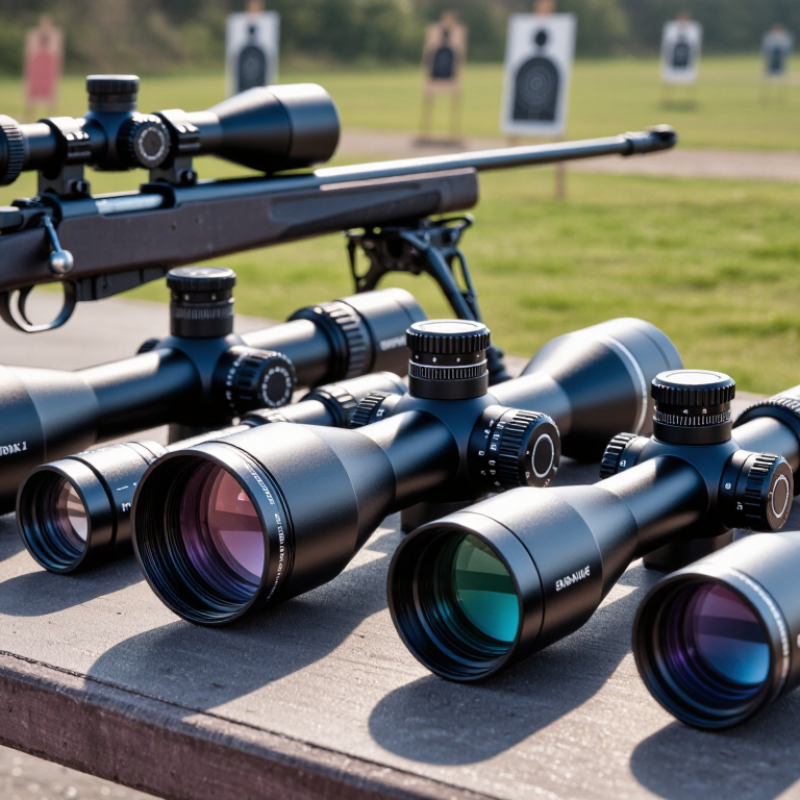
Range scopes are optical devices designed to help users inspect distant objects with greater clarity. In practical range work, they are commonly used to view paper targets, mark impact groups, and observe small details from a safe position. Their main purpose is not simply to make objects look larger. A useful scope improves observation, supports careful measurement, and reduces unnecessary movement.
Most range scopes combine a front lens, internal lenses, an eyepiece, and a focusing system. Some models also include adjustable magnification. Higher magnification can reveal fine details, but it may narrow the field of view and make hand movement more noticeable. Light matters too. A bright afternoon and a shaded indoor lane can produce very different images through the same scope.
Clarity depends on more than magnification. Lens quality, eye position, focus, and atmospheric conditions all influence what the user sees. Parallax errors can make an object appear shifted when the viewing angle changes. That detail is easy to overlook. A stable tripod and a level setup usually improve consistency. Still, a scope does not replace judgment. I have found that glare, heat shimmer, or a rushed adjustment can distort an otherwise clear view. Users should follow range rules, keep equipment directed safely, and record observations carefully. Small notes about distance, lighting, and focus can make later comparisons more reliable.
A range scope is more than a magnifying tube. Its core elements must work together. The objective lens gathers incoming light and affects image brightness. Larger lenses can improve low-light performance, but they also add weight. The ocular lens shapes the final view for the user’s eye. A clear sight picture should appear without forcing the head into an awkward position. Small details matter here.
The main tube protects the internal optics and supports the adjustment system. Inside, the reticle provides a visual reference for aiming and measurement. It may sit near the front or rear focal plane, changing how it appears during magnification changes. Turrets control elevation and windage adjustments. Reliable turrets should move predictably and return accurately to their original settings. A firm, audible click helps, though sound alone proves little. Parallax adjustment reduces apparent reticle movement at different distances.
Mounting hardware, eye relief, and adjustment range complete the system. Eye relief protects comfort and helps maintain a consistent view. A stable mount keeps the scope aligned during repeated use. During careful testing, users should check focus, image sharpness, tracking, and zero retention. No scope is perfect. I have found that impressive magnification can hide a narrow field of view or slow adjustment. That trade-off deserves honest attention before choosing equipment.
Range scopes are optical tools built to make distant targets measurable and visible. Their valid boundaries depend on magnification, field of view, parallax, and adjustment travel. A 4–16× scope, for example, covers a wider viewing range than a fixed 12× model. Yet higher magnification does not always mean better performance. Heat shimmer, low light, and unstable support can reduce useful detail. ISO 14132-1:2015 defines key optical terms, including field of view and magnification, helping users compare measurements consistently.
A scope determines its practical boundary through several limits. The near boundary is shaped by minimum focus distance and parallax correction. The far boundary depends on image clarity, atmospheric conditions, and reticle visibility. Click values also matter. If one adjustment click moves the point of aim by 0.1 milliradian, repeated corrections create a predictable grid at distance. The 2023 National Shooting Sports Foundation participation report counted more than 52 million target shooters in the United States, showing why clear, repeatable equipment standards matter. Still, field conditions rarely match a specification sheet. That gap deserves attention.
Tips: Test the scope at several distances in lawful, supervised settings. Record focus, lighting, magnification, and group size. Check the reticle at the highest setting. If the image becomes dim or shaky, reduce magnification. Leave a small margin inside the stated boundary; real conditions can change quickly.
What Are Range Scopes and How Do They Work?
Range scopes are optical instruments designed to magnify distant targets and reveal small details. They use objective lenses, internal prisms, and an eyepiece to gather and focus light. Many models also include adjustable magnification. Fixed-power scopes offer a steady image and simpler operation. Variable-power scopes provide flexibility across different distances. Spotting scopes are another common type. They usually sit on a tripod and help observers inspect paper targets, air-rifle targets, or distant objects without touching the mounted equipment.
Range scopes serve several practical purposes. Target shooters use them to check group placement and identify small changes between shots. Instructors use them to demonstrate sight alignment and explain impact patterns. Range staff may use higher-magnification models for observation and safety monitoring. Parallax adjustment can improve clarity when the target appears distant. Turrets allow controlled changes to elevation and windage, but they require careful handling. A stable tripod or mount matters more than many beginners expect. Small vibrations can turn a clear image into a shaky blur. Bright light helps, yet excessive glare can reduce contrast. A sunshade may help.
More magnification is not always better. It can narrow the viewing area and make moving between targets slower. I would also question buying advanced features before learning basic focusing and adjustment. Users should follow local range rules, wear suitable eye protection, and store optical equipment securely. Regular lens cleaning with proper materials protects image quality. A rushed setup often creates errors that look like equipment failure.
| Scope Type | Typical Magnification | Common Objective Lens | Typical Field of View | Main Use | Key Strength |
|---|---|---|---|---|---|
| Fixed-Power Scope | 4×–10× | 32–50 mm | Approximately 3–25 ft at 100 yd | Target shooting and consistent-distance use | Simple operation, stable optical design, and often lower weight |
| Variable-Power Scope | 1–4×, 3–9×, 4–16×, or higher | 24–56 mm | Approximately 2–40 ft at 100 yd, depending on power | General-purpose shooting across changing distances | Balances a wide viewing area at low power with detail at high power |
| Low-Power Variable Optic | 1–6× or 1–8× | 20–30 mm | Approximately 10–100 ft at 100 yd | Fast target acquisition at short and medium distances | Broad low-power view with moderate magnification available |
| Long-Range Scope | 5–25× or 6–36× | 50–56 mm | Approximately 3–20 ft at 100 yd | Precision target shooting at extended distances | High magnification and adjustment systems designed for precise aiming |
| Scout-Style Scope | 2–7× | 28–40 mm | Approximately 6–35 ft at 100 yd | Situational awareness and medium-distance shooting | Long eye relief allows viewing with both eyes open in many setups |
| Compact Scope | 2–7× or 3–9× | 20–40 mm | Approximately 4–35 ft at 100 yd | Lightweight equipment and field carry | Reduced size and weight with practical magnification |
| Illuminated-Reticle Scope | 1–10× or higher | 24–56 mm | Varies by magnification and optical design | Low-light conditions and targets with limited contrast | Reticle visibility can improve aiming speed when illumination is appropriate |
A range scope uses a series of lenses to collect and focus light, magnify the target image, and present a reticle in the viewer’s line of sight. Magnification changes the apparent size of the target, while the objective lens affects light-gathering capacity and overall size. Elevation and windage turrets move the point of aim to compensate for distance and horizontal conditions. Field of view generally becomes narrower as magnification increases.
What Are Range Scopes and How Do They Work?
Range scopes are optical devices designed to make distant targets appear closer and clearer. They use a series of lenses to gather light, enlarge an image, and guide the viewer’s eye toward a focused sight picture. Some models also include adjustable magnification, elevation controls, and markings that help estimate distance or compensate for movement.
Their main advantage is improved visibility. In practical field conditions, a clear scope can reveal details across open ground, wooded areas, or changing light. Adjustable magnification adds flexibility. A lower setting helps with wider scenes, while a higher setting supports careful observation of distant objects. Good eye relief also improves comfort during extended use. Small controls matter.
However, higher magnification does not guarantee better results. It can narrow the field of view and make movement harder to track. Hand vibration becomes more noticeable, especially at maximum power. Poor lighting may expose weaknesses in the glass or coatings. Weight is another limitation. A heavy scope can make equipment tiring to carry and slower to adjust.
Real-world performance depends on practice, maintenance, and honest expectations. Users should check focus, alignment, and adjustment consistency before relying on any reading. Weather can interfere, too. Heat shimmer may distort distant images, while rain can reduce contrast. I have found that simple settings often work better than constant adjustments. That may sound less impressive, but it is usually more reliable.
A range scope limits where a variable can be accessed within a defined section of code. The chart below shows visibility across the source lines of a nested-scope example. A value of 1 means the variable is accessible; 0 means it is outside its scope.
1 let outer = 10;
2 function calculate(input) {
3 let doubled = input * 2;
4 if (doubled > outer) {
5 const limit = 20;
6 return Math.min(doubled, limit);
7 }
8 }
Range scopes improve safety by preventing temporary variables from being used outside their intended region and reduce naming conflicts in nested code. Their limitation is that a value becomes inaccessible after its range ends, so data that must survive longer needs to be returned, passed as an argument, or stored in a wider scope.
It helps users inspect distant paper targets and see small details clearly. It can show impact groups from a safe position. It also reduces unnecessary movement during observation.
Objective lenses gather light, while internal lenses and an eyepiece focus the image. Some models use prisms and adjustable magnification. The design matters, but setup matters too.
No. Higher magnification can reveal fine marks, but it narrows the viewing area. Hand movement also becomes more obvious. More power is not always more useful.
Lens quality, eye position, focus, lighting, and air conditions all matter. Heat shimmer may distort distant details. Glare can reduce contrast on a bright afternoon.
Small vibrations can turn a clear image into a shaky blur. A stable tripod keeps the view consistent. A level setup also helps during repeated observations.
Parallax can make a target appear shifted when your viewing angle changes. Careful eye placement reduces this problem. Parallax adjustment may improve distant target clarity.
Fixed magnification offers simpler operation and a steady image. Variable magnification provides flexibility across different distances. Beginners may benefit from basic controls before advanced features.
Clean lenses with suitable materials and avoid rough cloths. Store the scope securely after use. Record distance, lighting, and focus for later comparisons. I still rush focus sometimes. That creates avoidable mistakes.
Range Scopes are systems used to define, interpret, and manage a specific interval between an identifiable lower boundary and upper boundary. Their main purpose is to clarify which values, positions, or conditions are considered valid within a given range. A typical Range Scope includes a starting point, an ending point, rules for whether those limits are included or excluded, and a method for handling values that fall outside the permitted area. These elements work together to create a clear and consistent framework for measurement, selection, comparison, or control.
To determine valid boundaries, Range Scopes evaluate each value against their defined limits and apply conditions such as minimum, maximum, equal-to, or between. Common forms include closed ranges, open ranges, and mixed ranges, with uses in data organization, software logic, planning, analysis, and technical operations. Their key advantages are clarity, consistency, and efficient decision-making. However, they may become difficult to manage when boundaries are unclear, values overlap, or exceptional cases require additional rules. Careful definition is therefore essential for reliable results.
