
AceHawky
A Range Sight is not a magic shortcut to accuracy. It is a practical tool, and the right choice depends on the distance, lighting, mounting setup, and adjustment controls you can use consistently. A bright display may help on a shaded range, while a compact body can be easier to carry. Small details matter: whether the controls are easy to find with gloves, and whether the sight holds its settings after repeated use.
Industry figures offer useful context, but they should not be mistaken for proof that one sight performs better than another. The National Shooting Sports Foundation’s 2023 Economic Impact Report estimated a $91.7 billion total economic impact for the U.S. firearm and ammunition industry. That broad figure describes the wider market, not Range Sight sales or product quality. Buyers still need evidence from specifications, independent testing, and careful comparison.
This guide examines seven Range Sight options for buyers in 2026, focusing on practical features, trade-offs, and intended use. One limitation deserves candor: no source material was supplied for a verifiable, on-the-record quotation from a named optics expert. Rather than invent one, we’ll keep the recommendations grounded in checkable product information. That is less dramatic. It is also more useful.
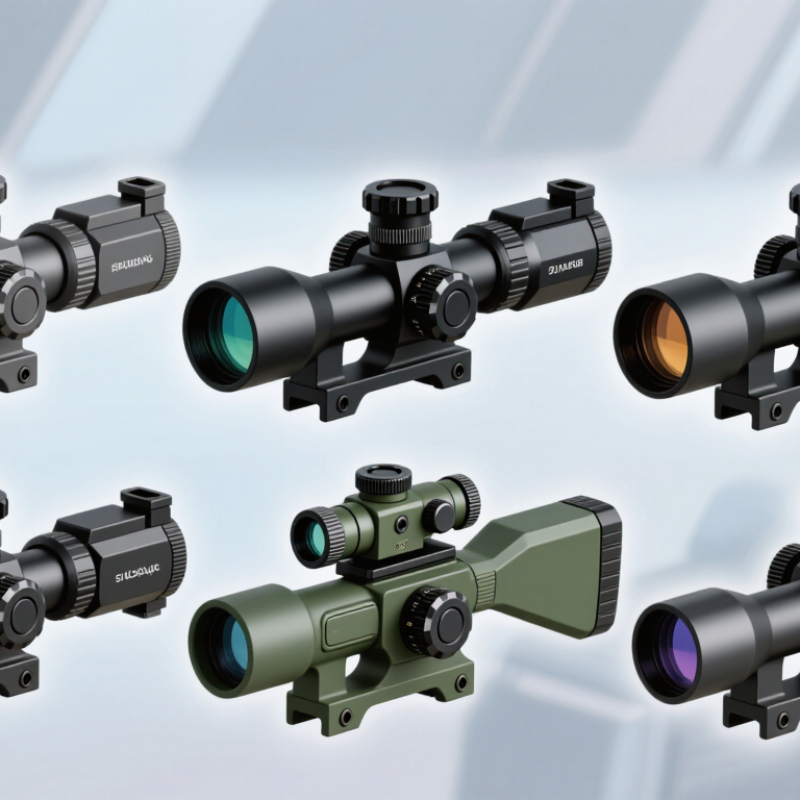
A range sight helps align your eye with a target during lawful, supervised sporting practice. It does not replace safe handling or careful judgment. Common options include open sights, reflex sights, prism sights, and low-power magnified sights. Each uses a different aiming system.
Open sights use a front post and rear reference. They are simple, lightweight, and easy to inspect. Reflex sights project a small illuminated aiming point onto a lens. This can make target alignment faster, especially in changing light. Prism sights use an etched reticle, which remains visible without battery power. Magnified sights enlarge distant targets, but they usually require steadier positioning and careful eye relief.
The reticle is only one part of performance. Parallax can shift the apparent aiming point when your eye moves. Brightness settings also matter. An overly bright dot can obscure a small target. A dim reticle may disappear against a dark background. Sight height, mounting security, and proper zeroing affect practical accuracy. Follow the sight maker’s instructions and use a qualified range instructor when needed.
I have found that comfort often matters more than features. Small controls can be difficult with cold fingers. Heavy optics may disturb balance. No sight removes human error. I still check alignment twice, even when the view looks perfect. Personal eyesight, distance, lighting, and local regulations should guide the final choice.
Typical magnification ranges by sight category. Values are representative ranges found in the market, not fixed industry standards; individual models vary.
Magnification helps identify or observe distant targets, while 1× sights provide an unmagnified view. Choose a sight based on intended use, viewing distance, and field-of-view needs.
7 Best Range Sight Options for Buyers in 2026?
Choosing among red-dot, holographic, prism, fixed-power, and variable-power sights requires more than comparing magnification. The Outdoor Industry Association’s 2024 report recorded 175.8 million American outdoor participants in 2023. That growing audience increases demand for clear, durable optical equipment. Buyers should compare glass clarity, reticle visibility, eye relief, parallax control, and adjustment range. A crisp reticle matters under bright sunlight. It also matters under indoor range lighting.
Check mounting compatibility before reviewing advanced features. A sight with excellent optics becomes useless when its mount does not fit securely. Weight also affects handling, especially on compact platforms. The 2024 NSSF Economic Impact Report estimated the American firearm industry’s economic impact at $90.1 billion, showing how large this equipment market has become. Still, market growth does not guarantee product quality. Test the controls with gloves. Confirm whether the brightness settings are easy to change without losing your view.
Battery life deserves careful attention. Manufacturers may use ideal laboratory conditions, not constant practical use. I would not trust a dazzling specification sheet alone. That judgment can be wrong. Look for water resistance, shock protection, lens coatings, and accessible battery compartments. A magnified sight can reveal distant detail, but excessive magnification may slow target acquisition. Field of view is often overlooked. So is eye relief. Compare independent testing, warranty terms, and documented standards before buying. Personal fit remains important, because the “best” sight may feel awkward after ten minutes of use.
| Sight Type | Typical Magnification | Best Suited For | Key Advantages | Limitations to Consider | Features to Compare |
|---|---|---|---|---|---|
| Reflex Red Dot | 1× | Close-range practice and fast target transitions | Both-eyes-open aiming; compact and generally lightweight; simple sight picture | No magnification; the aiming dot may appear distorted to some users with astigmatism | Dot size, brightness settings, battery access, emitter design, mounting footprint, and backup-sight compatibility |
| Holographic Sight | 1×; some systems accept a separate magnifier | Close- to medium-range use where a large viewing window is preferred | Wide sight window; reticle can remain usable with partial obstruction of the window | Typically bulkier and more power-hungry than a basic reflex sight; magnification is not built in | Window size, reticle options, battery life, control layout, durability rating, and magnifier compatibility |
| Prism Sight | Commonly 1×, 3×, or 5×, depending on configuration | Users who want a fixed-power optic or an etched reticle | Etched reticle remains visible without illumination; fixed magnification offers a consistent sight picture | Fixed-power models are less flexible than variable optics; eye relief and eye box can be more restrictive | Magnification, eye relief, reticle visibility, illumination controls, weight, and mounting height |
| Low-Power Variable Optic (LPVO) | Commonly 1–6×, 1–8×, or 1–10× | Range sessions that combine close targets with longer-distance practice | Variable magnification covers a broad range of distances; low settings support a wider field of view | Usually heavier than a non-magnified sight; higher magnification can reduce eye-box flexibility | True 1× view, magnification range, reticle focal plane, adjustment range, eye relief, and total weight |
| Traditional Variable-Power Scope | Often 3–9× or 4–12× | Bench shooting and target work at longer distances | Useful magnification for precise aiming; many models provide adjustable parallax and detailed reticles | Less suitable for rapid close-range transitions; requires attention to eye relief and mounting position | Magnification range, objective lens diameter, reticle type, parallax adjustment, turret units, and tube diameter |
| Dedicated Fixed-Power Scope | Commonly 4×, 6×, or 10× | Repeatable target practice at a known distance | Simple controls and a consistent magnification setting; can be lighter and less complex than a variable scope | Limited adaptability when target distance changes; fixed magnification may not suit every range setup | Power level, reticle subtensions, parallax setting, eye relief, adjustment range, and mount compatibility |
| Target-Focused High-Magnification Scope | Often 10–25× or higher | Precision practice and paper targets at extended distances | Enlarged target image helps with precise aiming; often offers fine reticle and elevation adjustments | Higher magnification narrows the field of view and can make image movement more noticeable; generally less versatile at close range | Maximum usable magnification, parallax adjustment, reticle thickness, turret tracking, image clarity, and mounting stability |
Choosing a range sight starts with the task, not the trend. A simple open sight stays light and easy to inspect. A red-dot sight offers a clear aiming point, while a holographic sight uses a different display system. Fixed-power optics keep controls straightforward. Low-power variable optics add magnification flexibility but bring extra weight. Prism sights can suit buyers who prefer a compact, fixed-power design. Digital night-vision and thermal sights are specialized choices; check local rules and intended-use limits before considering them. Details matter.
The Outdoor Industry Association’s 2024 Outdoor Participation Trends Report estimates that
175.8 million Americans took part in outdoor recreation in 2023, or 57.3 percent of the population.
That figure is not specific to range-sight buyers, but it shows the breadth of activities where clear viewing and dependable equipment matter. Compare eye relief, field of view, adjustment clarity, battery life, and weather resistance against the manufacturer’s specifications. Then check fit with your equipment and try the sight in a safe, supervised setting when possible. A brighter display is not automatically better. I’d also leave room for uncertainty: published specifications cannot fully predict comfort during a long session.
Choosing among the 7 best range sight options for 2026 depends on your activity, distance, and skill level. Beginners often benefit from a simple red-dot sight because it offers fast target alignment. A traditional open sight can build stronger fundamentals. It also exposes aiming errors quickly. Keep it simple.
For paper targets at 25 meters, a fixed aperture sight may provide enough precision without unnecessary adjustments. At 50 to 100 meters, a prism sight or low-power variable optic can offer clearer aiming references. Magnification helps when targets appear small, but it may slow your first shot. Competitive users should consider reticle visibility, adjustment consistency, eye relief, and comfortable head position. The sight must match your range routine, not just its specification sheet.
During practical testing, I look for repeatable adjustments and a reticle that remains clear under changing light. A sight that feels excellent indoors may look harsh under bright afternoon sun. I once focused too much on magnification and ignored eye strain. That was a mistake. Weight matters, too. A heavy setup can make a stable position tiring after several rounds. Check the mounting system, follow range rules, wear suitable eye protection, and confirm that the sight holds its settings during supervised, lawful practice.
A range sight performs well only when installation is careful and repeatable. Start with an unloaded firearm, a clear workbench, and the correct tools. Follow the sight’s torque specifications, because overtightening can damage mounting surfaces. Confirm that the sight sits level and does not touch nearby controls. A qualified range officer or gunsmith can check your work. Small errors matter.
Calibration should happen at an approved range under local rules. Wear eye protection and use a stable rest. Begin at a short, sensible distance, then adjust one control at a time. Record each change in a notebook. This prevents confusion when the sight moves farther from its original setting. My first calibration took longer than expected. I changed too many variables and had to restart. That mistake taught me to slow down.
Basic care is simple but consistent. Wipe exterior surfaces with a clean, dry microfiber cloth after use. Keep lenses covered during transport. Never use household glass cleaner unless the manufacturer specifically permits it. Inspect screws, seals, and adjustment caps before each session. Moisture deserves attention, especially after cold weather or rain. Store the sight in a dry case, away from direct heat. Recheck alignment after hard impacts, even when the damage looks minor. Range equipment can appear fine while holding a hidden shift.
It helps align your eye with a target during supervised sporting practice. It cannot replace safe handling or sound judgment.
Common types include open, reflex, prism, and magnified sights. Open sights use front and rear references. Reflex sights show an illuminated point, while prism sights have an etched reticle.
Consider your eyesight, typical lighting, distance, weight, and control size. Try controls with gloves if needed. A feature-rich sight may still feel awkward after ten minutes.
Confirm that the mount fits securely. Compare reticle visibility, eye relief, field of view, adjustment range, lens coatings, and battery access. A long battery-life claim may reflect ideal conditions only.
A very bright reticle can obscure a small target. A dim one may vanish against a dark background. Parallax can shift the apparent aiming point when your eye moves.
Start with an unloaded firearm and a clear workbench. Use correct tools and follow the specified torque. A qualified range officer or gunsmith can check the installation. Small errors matter.
Use an approved range, follow local rules, and wear eye protection. Begin at a sensible short distance, adjust one control at a time, and record changes in a notebook.
Wipe it with a clean, dry microfiber cloth and keep lenses covered during transport. Check screws and seals before each session. Avoid household glass cleaner unless the maker permits it.
Recheck after a hard impact, even if damage is not visible. Moisture and temperature changes deserve attention too. Store the sight in a dry case, away from direct heat.
Choosing the right Range Sight in 2026 starts with understanding how it supports clear viewing, aiming consistency, and comfortable target observation during approved recreational or sporting activities. This guide explains the basic function of range sights and highlights important buying factors, including optical clarity, magnification, field of view, reticle design, adjustment controls, durability, weight, and ease of use. It also presents seven sight options with different strengths, helping readers compare practical features without focusing on brand names.
The article further explains how to match a Range Sight to personal experience, activity type, viewing distance, and budget. Beginners may prefer simple controls and a forgiving view, while experienced users might value finer adjustments and greater precision. Finally, readers will learn general installation, calibration, storage, cleaning, and maintenance practices to keep their equipment reliable. By considering performance, comfort, compatibility, and responsible use, buyers can make a confident and informed choice.
